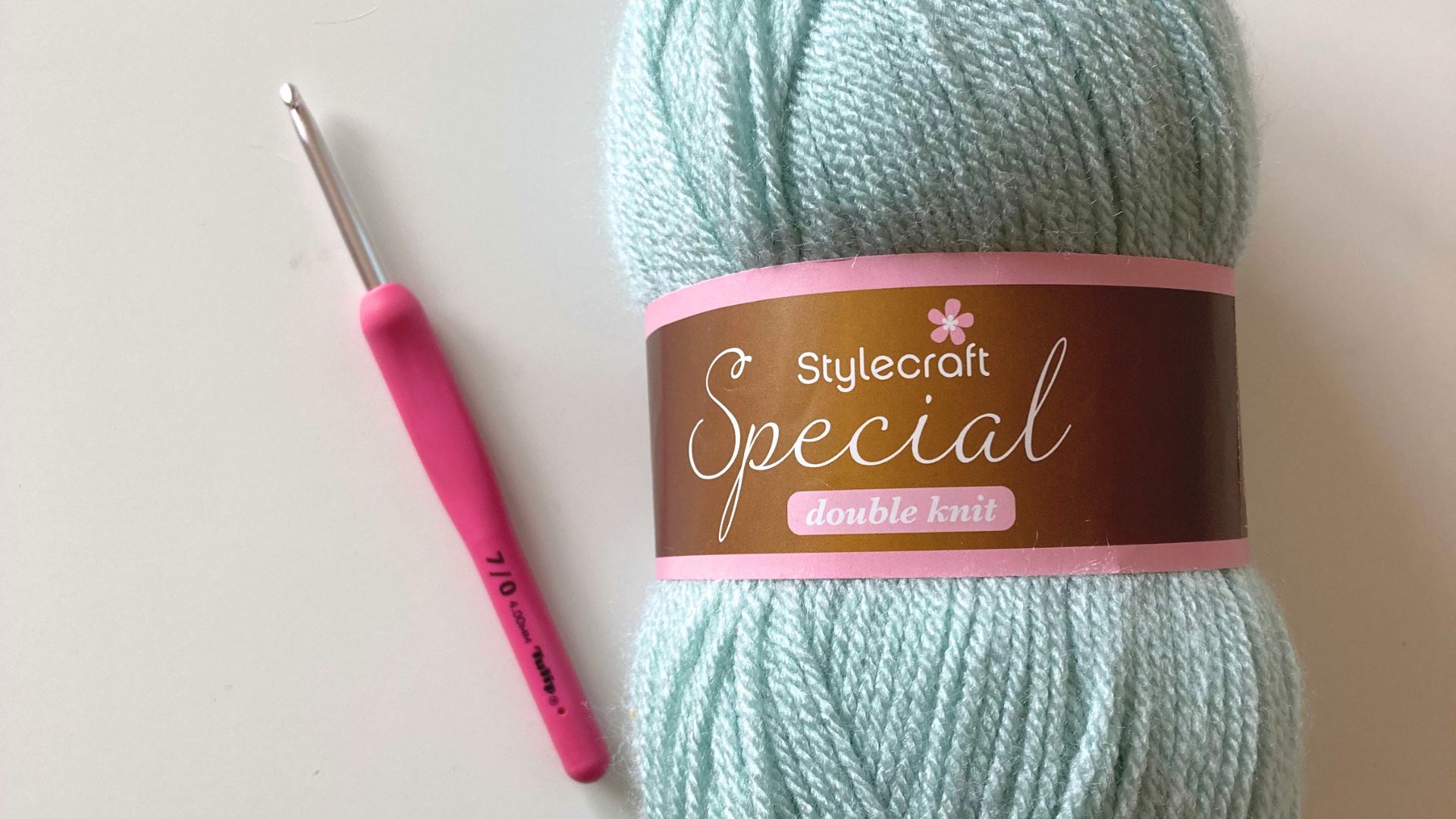
Blankets are the ultimate relaxing comfort project, and having the right supplies can make the crochet experience even better! I have picked out my favourite and most used supplies to help you get started.
Yarn
- Picking the right yarn can be intimidating, as there are so many options. It is also an important material, as it decides the colour and feel of your blanket.
- When picking your yarn, you will need to decide on the weight and fibre.
- My go-to combo is DK acrylic yarn.
- The tables below list some alternative fibres and weights.
Yarn Weights
| Weight | Suitable Projects |
| Fingering (super fine, 1) | Lacey items |
| Sport (fine, 2) | Amigurumi baby toys, garments |
| DK (light, 3) | Blankets, garments |
| Worsted/Aran (medium, 4) | Hats, sweaters, blankets |
| Chunky (bulky, 5) | Scarfs, plush toys, bags, rugs |
Yarn Fibres
| Fibre | Pros | Cons |
| Acrylic | Affordable, widely available, and machine washable. | More prone to pilling and is less durable. |
| Wool | Warm and washable if superwash varieties are chosen. Available in unique, hand-dyed colours. | Prone to felting and shrinking in the wash. Some wool types may be itchy. More expensive. |
| Cotton | Breathable, sturdy and absorbent. | Not as warm. Cool to the touch instead of soft. |
Hooks
Crochet hooks come in different styles and the one you choose affects your tension and stitch size. Try out a few different sizes and materials to see what suits you. Once you find one you like I recommend investing in a set that includes various sizes.
- Aluminum hooks are smooth and fast. As a bonus they often come with rubber ergonomic handles that are comfy when crocheting for long sessions.
- Plastic hooks are lightweight and are most often used with chunky yarn, such as when making plushie toys.
- Bamboo hooks are inexpensive and less slippery, which may be helpful when working with certain yarns.
Always check your yarn label or pattern for the recommended hook size. I often use the corresponding size when making a blanket. The hook size indicates the size of the shaft, not the point/throat. If your stitches feel too tight, try adjusting your hook size up one, or go down one if your stitches feel too loose. Check your pattern to see if US or UK sizing is used, as in the US hooks have alphabetical names, while in the UK they are measured in millimetres.
Scissors
A good pair of small, sharp scissors is useful for cutting yarn cleanly. Embroidery scissors or sewing snips are great choices.
Needles
Called tapestry, yarn, or wool needles, they are needed for weaving in ends and seaming pieces. They feature larger eyes and blunt tips to avoid splitting yarn. I recommend having a variety of lengths and eye sizes so you are prepared for different types of yarn.
Measuring Tape
A measuring tape helps if you are making a blanket to fit a specific purpose (like a crib or bed) or following a pattern and wish to achieve the same size as the designer.
Stitch Markers
Super helpful for tracking the beginning of rounds, maintaining stitch counts or pattern repeats, and marking the right or wrong side of your work. You can use plastic locking markers, safety pins, scrap yarn, or cute handmade clay charms.
Extras
- Row counters can help you count and track rounds and rows, which is helpful for long projects or when putting away your work to pick up another time.
- Project bags are fun and help you stay organized when taking projects on the go. I love to pick out cotton quilting prints and sew my own simple totes and zip pouches. A variety of styles are available, either from fashion stores such as Lululemon (I love their tote bags) or handmade from makers (Etsy and your local yarn store are great places to browse styles).
- Blocking mats and pins are necessary if you want to block your blanket. You can also use an ironing board and steam iron, or skip blocking altogether if you are happy with the drape and size of your finished project.
- I like to work from the centre but find this can get tangled. I like to wind my yarn into cakes with a ball winder to ensure they stay tangle-free.
- If you purchased your yarn in skeins and want to wind it into a ball an umbrella swift comes in handy when feeding the yarn to your ball winder.
- Having a pen and notebook handy helps to keep track of your own designs or pattern alterations. Also great for keeping notes to update your project pages on Ravelry!
My Favourites
- Stylecraft Special DK
- 4mm Tulip Rose crochet hook
- Handmade tote bag and zip pouch
- Wool needle
- Locking plastic and clay charm stitch markers
- Retractable measuring tape
- Mini foldable craft scissors
- Pen and sticky note pad
- Ball winder as I like to work from the centre of cakes